Overview
Everything people expect from Xinjiang — desert, bazaars, dust — is in the south. The north is something else entirely: the Ili valley, where the Tian Shan opens into pasture, the rainfall is generous, and Kazakh herders still move their animals to summer grass on horseback.
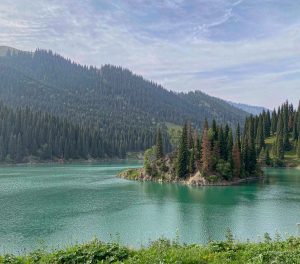
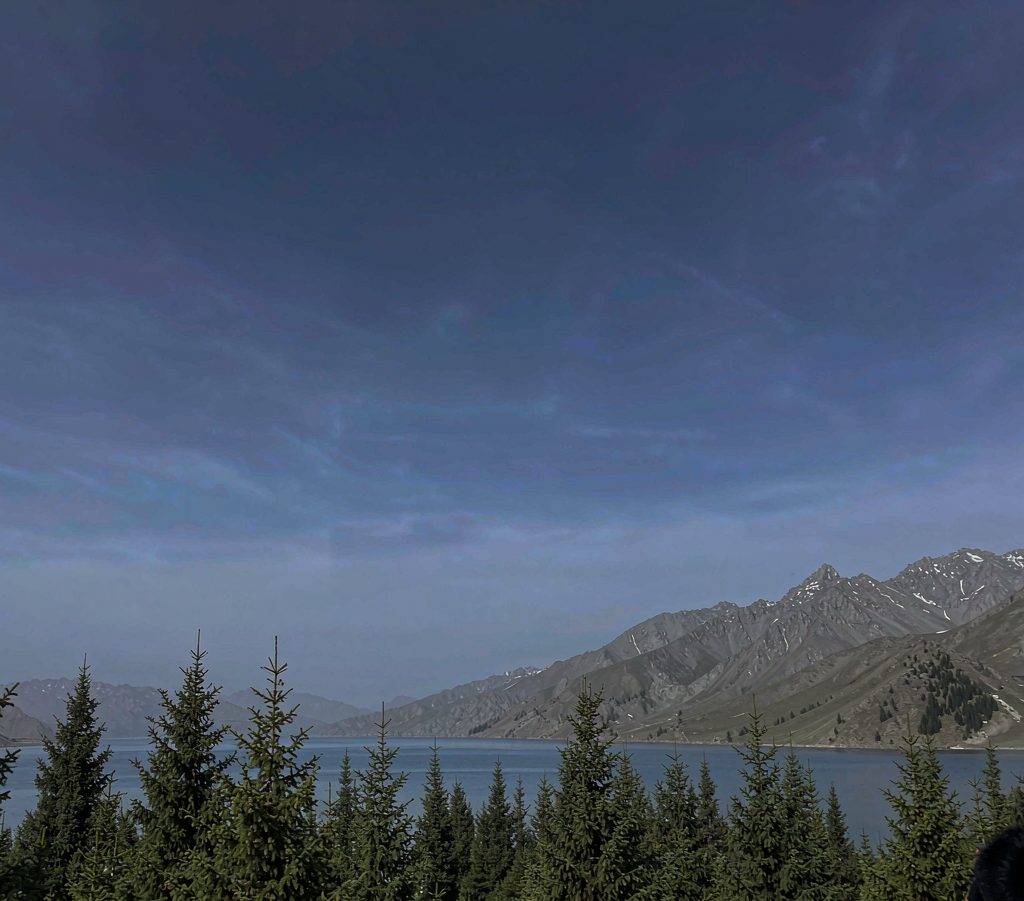
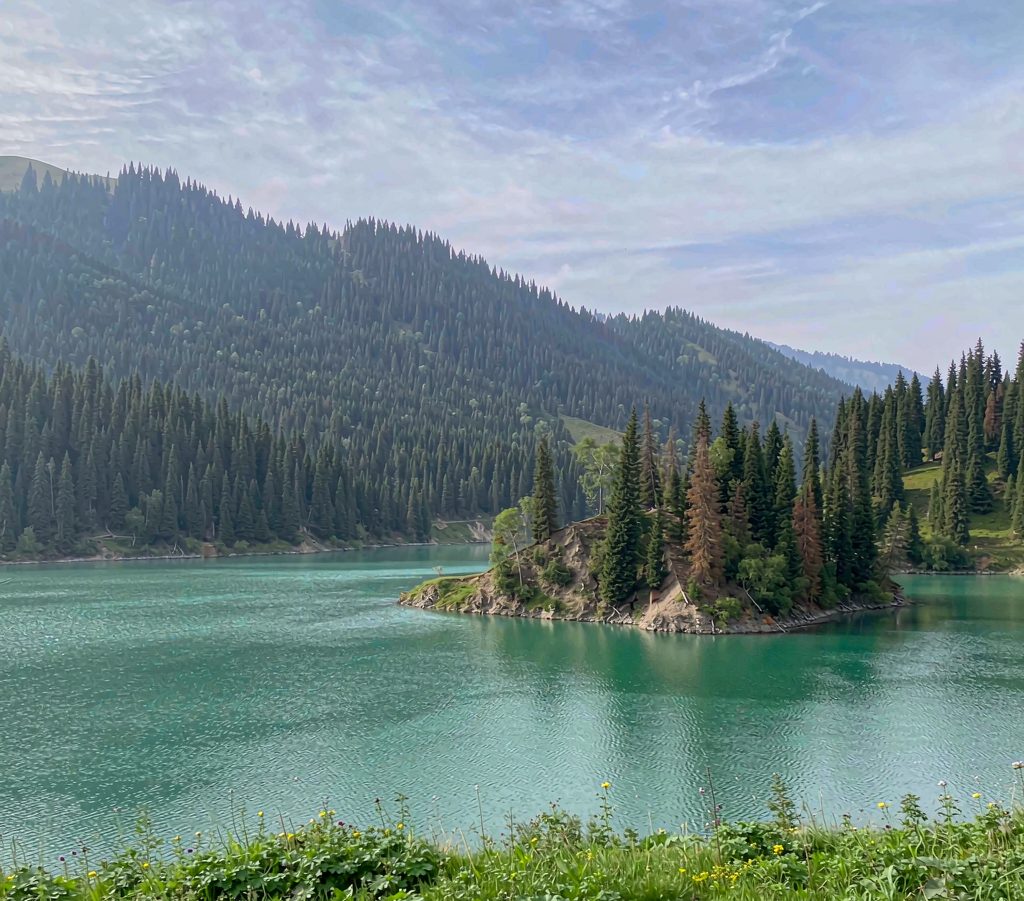
Sayram Lake is the opening. At 2,073 metres and 458 square kilometres, it is the largest alpine lake in Xinjiang, filled with glacial melt and ringed by snow peaks, and in June and July the shoreline is a meadow of wildflowers. From there the route runs east through the Kalajun grassland — a UNESCO-listed landscape of rolling pasture cut by gorges, grazed since the Bronze Age — and on to Nalati, where Kazakh families run horse trekking and yurt stays.
This is the best trip in Xinjiang for walking, riding and simple outdoor pleasure, and the summer weather is close to ideal: long days, low humidity, temperatures in the low twenties.
- Sayram Lake, 458 sq km of glacial water ringed by snow peaks
- Kalajun grassland, a UNESCO-listed summer pasture cut by gorges
- Nalati grassland and Kazakh horse trekking to a summer yurt camp
- Guozigou Bridge, a cable-stayed span 200 m above a forested gorge
- Kazakh eagle hunting demonstration and a yurt homestay
- Ili valley fruit orchards and the lavender fields of Huocheng
Itinerary
-
1 Arrival in Urumqi & Drive West
Dinner Jinghe or Bole, 4-star hotelAfternoon: Meet your guide at Urumqi Diwopu airport. We drive west immediately — around five hours along the northern foot of the Tian Shan, through cotton and melon country toward the Dzungarian basin.
Evening: Arrival and dinner. The food here has shifted decisively toward the Kazakh and Hui end of the spectrum: hand-pulled noodles, lamb stew, and the flatbreads that are baked in a tandoor on nearly every street.
Practical note: The distances in Xinjiang are large and the roads are good but the speed limits are strictly enforced with cameras. Your driver will not be rushed, and neither should the schedule be.
-
2 Sayram Lake & the Guozigou Gorge
Breakfast, Lunch Sayram Lake area, 4-star hotel or yurt09:00 - Sayram Lake: Known as the last tear of the Atlantic, because the moist air that reaches this far east condenses here and no further. It sits at 2,073 metres, covers 458 square kilometres, and is fed by glacial melt from the surrounding peaks. The water is an unusual deep blue that changes with the weather, and the road circuits the whole lake with stopping points along the eastern shore.
10:30 - Lakeshore walk: In June and July the grassland behind the shore is covered in wildflowers — irises, poppies, gentians — with snow peaks behind. We walk for an hour or two and drive the circuit, stopping where the light is best.
13:00 - Lunch: Kazakh cooking near the lake, sometimes in a yurt on the shore.
15:00 - Guozigou: The Fruit Valley, a gorge on the road south toward Yining. The Guozigou Bridge carries the expressway across it on cable stays, dropping 200 metres to the forest floor, and it is one of the most spectacular pieces of road engineering in the country. We stop at the viewing platform.
17:30 - Yining: Arrival in the Ili valley, the greenest and most fertile part of Xinjiang, and the cultural centre of its Kazakh and Uyghur populations.
-
3 Yining, Huocheng Lavender & the Ili River
Breakfast, Lunch Yining, 4-star hotel09:00 - Huocheng lavender fields: Around an hour northwest of Yining, and the reason this corner of China is called the Provence of the East. Huocheng sits at a similar latitude and altitude to the French lavender country, and from mid-June to mid-July the fields run purple to the horizon with the Tian Shan behind. Outside those weeks the distilleries and shops are still worth a stop.
11:30 - Return to Yining and lunch: The city's Uyghur restaurants are some of the best in the region. Try the manti steamed dumplings, the laghman, and the Ili ice cream made with local milk.
15:00 - Ili River valley: A drive along the river, through apple orchards and apricot groves — the Ili valley produces much of Xinjiang's fruit and the orchards are at their best in late summer. If the season is right we stop at a farm to buy.
17:30 - Kazakh village: A short visit to a Kazakh settlement outside the city, with the evening milking and the animals coming in.
Evening: Free in Yining.
-
4 Kalajun Grassland
Breakfast, Lunch Tekes or Kalajun, 4-star or yurt08:00 - Departure: A two-hour drive southeast to Tekes, a town laid out as a giant bagua — the eight trigrams of the I Ching — with radiating streets and ring roads, visible properly only from the air or the viewing tower.
10:30 - Kalajun grassland: A UNESCO World Heritage component of the Silk Roads: the Routes Network of Chang'an-Tianshan corridor, and one of the great mountain pastures of Central Asia. The name means dark forest meadow in Kazakh. The landscape is rolling, treeless, and cut by deep gorges — the Koksu river canyon runs through it with cliffs dropping several hundred metres. Bronze Age burial mounds and petroglyphs across the pasture show that people have been bringing animals here for four thousand years.
11:30 - Eastern and western Kalajun: Internal shuttles cross the plateau. The eastern section has the wildflower meadows, the west has the canyon viewpoints and the Forest of Flowers — a band of spruce and meadow where the Kazakh families camp in summer.
13:30 - Lunch: In a Kazakh yurt on the pasture — kumis (fermented mare's milk, which you should try once), boiled mutton, bread and tea.
16:00 - Return to Tekes, or stay in a yurt camp on the grassland if the group prefers.
Important: The pasture is at around 2,000 to 2,800 metres and the weather changes fast. Bring a windproof layer even in July.
-
5 Nalati Grassland & Kazakh Horse Culture
Breakfast, Lunch, Dinner (yurt) Nalati, Kazakh yurt camp08:00 - Departure: A three-hour drive east to Nalati, on the northern edge of the Ili valley where the Kunes river cuts through the Tian Shan.
11:30 - Nalati grassland: The name means the place where the sun first shines. It is the best known of the Ili pastures, a broad river terrace at around 1,800 metres with snow peaks to the south and spruce forest climbing the slopes behind. Kazakh families have summered here for centuries, and the yurt camps still operate as working herding camps rather than tourist attractions.
13:00 - Lunch at the camp.
15:00 - Horse trekking: Two to three hours on Kazakh horses along the valley, crossing the river and climbing to a shoulder with the full sweep of the pasture below. No previous riding experience is needed — these horses work every day and follow the lead. Longer treks of two or three days can be arranged if you ask in advance.
18:00 - Eagle demonstration: Depending on the season and the family, a demonstration of golden-eagle hunting, the Kazakh art recognised by UNESCO as intangible cultural heritage. The birds are heavy and the speed is startling.
20:00 - Dinner in the yurt: Boiled lamb with onions, hand-pulled noodles, kumis and mare's-milk vodka if you are feeling brave.
-
6 Kunes River Valley & Return to Yining
Breakfast, Lunch Yining, 4-star hotel07:30 - Dawn on the pasture: The best hour. Mist in the valley, the yurts smoking, and the horses turned out overnight grazing through it. Worth setting an alarm for.
09:00 - Breakfast at the camp.
10:00 - Kunes valley drive: We take the slower road back west along the river, through Kazakh villages, past hay meadows being cut and stacked by hand, and over a low pass with views north to the Borohoro range.
13:00 - Lunch: In a village along the way — usually a single dish, usually lamb, usually excellent.
16:30 - Return to Yining: Check in and rest.
Evening: A final Uyghur dinner in Yining. The night market on the riverfront grills skewers over charcoal and the whole street smells of cumin.
-
7 Departure from Yining
Breakfast Not includedMorning: Depending on your onward travel, a walk through Yining's old Hui and Uyghur quarters, or the Linzexu Memorial — the Qing official who was exiled here after the First Opium War and who spent his banishment surveying the region's agriculture and irrigation with more competence than his persecutors expected.
Late morning: Transfer to Yining Nalati airport for flights to Urumqi and onward, or overland back to Urumqi — around eight hours, or overnight by sleeper train if you prefer and the schedule allows.
Practical note: Yining airport is small and the schedule is limited. Most international itineraries route back through Urumqi; if you want to avoid repeating the drive, tell us at booking and we will substitute the overnight sleeper.
Gallery
What's included
- 6 nights at 4-star hotels and Kazakh yurt camps
- Daily breakfast plus 5 lunches and 2 dinners
- English-speaking guide throughout
- Private 4WD vehicle with driver for the mountain roads
- All entrance fees listed (Sayram Lake, Kalajun, Nalati, Guozigou)
- Kalajun and Nalati internal shuttle buses
- Kazakh horse trekking session and eagle-hunting demonstration
- Yurt homestay with dinner and breakfast
- Airport and station transfers
Not included
- Flights and trains to and from Urumqi or Yining
- Most dinners
- Travel insurance and visa fees
- Tips for guide and driver
- Personal expenses and hotel incidentals
- Extended multi-day horse trekking (can be arranged)