Overview
Xishuangbanna is the only part of China with a genuinely tropical climate, and it feels much closer to Laos and Thailand — which it borders — than to the rest of the province.
The Dai people have lived here for more than a thousand years and their culture sets the tone: stilt houses, Theravada Buddhist temples with gold spires, and a cuisine built on wild herbs, river fish, sticky rice and sour-fermented flavours. Around Jinghong, the prefectural capital, you visit the Manting and Menghan temples, walk the tropical rainforest boardwalks at Wild Elephant Valley and the Rainforest Valley, and eat at the Gaozhuang night market, which is the best street food in southern Yunnan.
It is warm year-round, and the April Water-Splashing Festival — the Dai New Year — is one of the great celebrations in Asia. Families do well here: the distances are short, the food is approachable, and the botanical garden has enough to hold a child's attention for a full day.
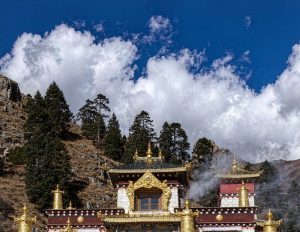
- Dai minority temples with gold spires and Theravada Buddhist architecture
- Rainforest Valley boardwalks through primary tropical forest
- Wild Elephant Valley, where the last Asian elephants in China are protected
- Xishuangbanna Tropical Botanical Garden, the largest in China
- Gaozhuang night market — grilled fish, wild herbs and sticky rice
- Dai village homestay and a water-splashing demonstration
Itinerary
-
1 Arrival in Jinghong & the Night Market
Dinner Jinghong, 4-star hotelAfternoon: Meet your guide at Xishuangbanna Gasa airport, ten minutes from Jinghong, and transfer to the hotel. The climate announces itself immediately — humid, green, and twenty degrees warmer than Kunming.
Late afternoon: A walk along the Mekong, which the Chinese call the Lancang and which forms the border with Myanmar and Laos a short way downstream. The riverbank promenade in the early evening is where the town comes out.
Evening: Gaozhuang Xishuangjing night market. This is the single best reason to come to Jinghong. Stalls grill whole fish stuffed with lemongrass, wrap sticky rice in banana leaf, pound green papaya into som tam, and sell every tropical fruit in season — mangosteen, rambutan, dragon fruit, jackfruit. Dai women roast chicken over charcoal with wild herbs and sell it on banana-leaf trays. Dinner is a progressive meal across a dozen stalls, guided by someone who knows which ones are good.
Practical note: The market runs until late. Go hungry and let your guide order for you.
-
2 Rainforest Valley & Wild Elephant Valley
Breakfast, Lunch Jinghong, 4-star hotel08:00 - Rainforest Valley: An hour north of Jinghong, a protected pocket of primary tropical rainforest threaded with elevated boardwalks and a small cable car over the canopy. The vegetation is the point — buttress roots, strangler figs, lianas, and a density of species that has no equivalent anywhere else in China. Guides point out the medicinal and edible plants the Dai have used for generations, and the air is noticeably cooler under the canopy.
12:00 - Lunch: A Dai restaurant near the park, with the sour, herbal, lightly fermented flavours of the local kitchen.
14:00 - Wild Elephant Valley: A reserve on the edge of the Mengyang Nature Reserve, home to the remaining wild Asian elephants in China — a population of around 300 animals. The park runs a cable car over the valley, a breeding and rescue centre, and elevated walkways where the elephants sometimes come to the river below. Sightings are never guaranteed, and your guide will not pretend otherwise; what is guaranteed is the forest itself and the work being done to keep the corridor open.
17:30 - Return to Jinghong.
-
3 Tropical Botanical Garden & Dai Village
Breakfast, Lunch, Dinner (Dai village) Menglun, 4-star hotel08:00 - Departure: An hour east to Menglun, on a peninsula of the Luosuo River.
09:00 - Xishuangbanna Tropical Botanical Garden: Founded in 1959 and the largest tropical botanical garden in China, with more than 13,000 living species across 1,125 hectares. It is genuinely excellent rather than merely large: the palm collection, the giant water lilies, the medicinal plant garden and the fig collection are all serious, and the riverside forest section is as close to a wild rainforest as most visitors will get. Families do well here — there is space, shade and constant visual interest.
12:30 - Lunch: On the garden grounds, using produce and herbs from the collections.
15:00 - Dai village: We continue to a Dai village near Menghan. The Dai build on stilts, with the livestock below and the living quarters above, and most houses have a small garden of herbs, betel and banana. We are shown around by a family, watch the weaving, and are taught — or at least shown — how to wrap and steam the sticky rice that is the centre of every Dai meal.
18:00 - Dinner: In the village. Roast chicken, sour bamboo shoots, grilled fish in banana leaf, and rice wine. If it is the season, there is a water-splashing demonstration; if it is April, there is no escaping the real thing.
-
4 Manting Park, Temple & Departure
Breakfast, Lunch Not included08:30 - Manting Park: The oldest garden in Xishuangbanna, once the pleasure ground of the Dai chieftains, on the Mekong floodplain just south of Jinghong. It holds mature rainforest trees, a lake and several temple buildings, and the morning is the right time for it.
10:30 - Mengle Temple: Also called the Great Buddha Temple, on a hill above the city, rebuilt on the site of a Dai royal temple destroyed in the 1960s. The gold spires and the standing Buddha are recent, but the hill has been a religious site for more than a thousand years, and the view over Jinghong and the river is the best in the area.
12:00 - Lunch: A final Dai meal in town — the pineapples here are worth the trip by themselves.
14:00 - Departure: Transfer to Gasa airport for your onward flight, or to the railway station for the high-speed service to Kunming (around three hours).
Practical note: Xishuangbanna has a distinct wet season from May to October, when afternoon rain is near-daily and the forest is at its greenest. The dry season from November to April is cooler and more comfortable but the forest is brown.
Gallery
What's included
- 3 nights at 4-star hotels in Jinghong and Menglun
- Daily breakfast plus 3 lunches and 1 Dai village dinner
- English-speaking local guide
- Private air-conditioned vehicle with driver
- All entrance fees listed (Rainforest Valley, Wild Elephant Valley, botanical garden, temples)
- Wild Elephant Valley cable car
- Dai village homestay visit and cultural demonstration
- Airport and station transfers
- Bottled water daily
Not included
- Flights and trains to and from Jinghong
- Most dinners (the night market is where you should be eating)
- Travel insurance and visa fees
- Tips for guide and driver
- Personal expenses and hotel incidentals
- Optional Mekong River cruise