Overview
Xinjiang is not really China in the way most travellers imagine it. It is Central Asia — Uyghur, Turkic, Muslim, and closer in every respect to Samarkand than to Shanghai. The food is lamb, naan and pilaf; the language on the street is Uyghur; the architecture is turquoise-tiled and domed.
This eight-day route runs the length of the region. From Urumqi you visit Heavenly Lake beneath the 5,445-metre Bogda Peak, then descend to Turpan, the hottest and lowest place in China at 154 metres below sea level, where the karez underground irrigation system has kept an oasis alive in the desert for two thousand years.
From there the road crosses the Tian Shan to Korla and Kuqa, through the Taklamakan's northern edge, to Kashgar. Kashgar is the reason to come: the Sunday livestock bazaar, the Id Kah Mosque, the Abakh Khoja tomb, and an old town where craftsmen still work in copper, wood and leather.
- Kashgar Sunday bazaar, the largest livestock market in Central Asia
- Id Kah Mosque, the largest mosque in China, and the Abakh Khoja Mausoleum
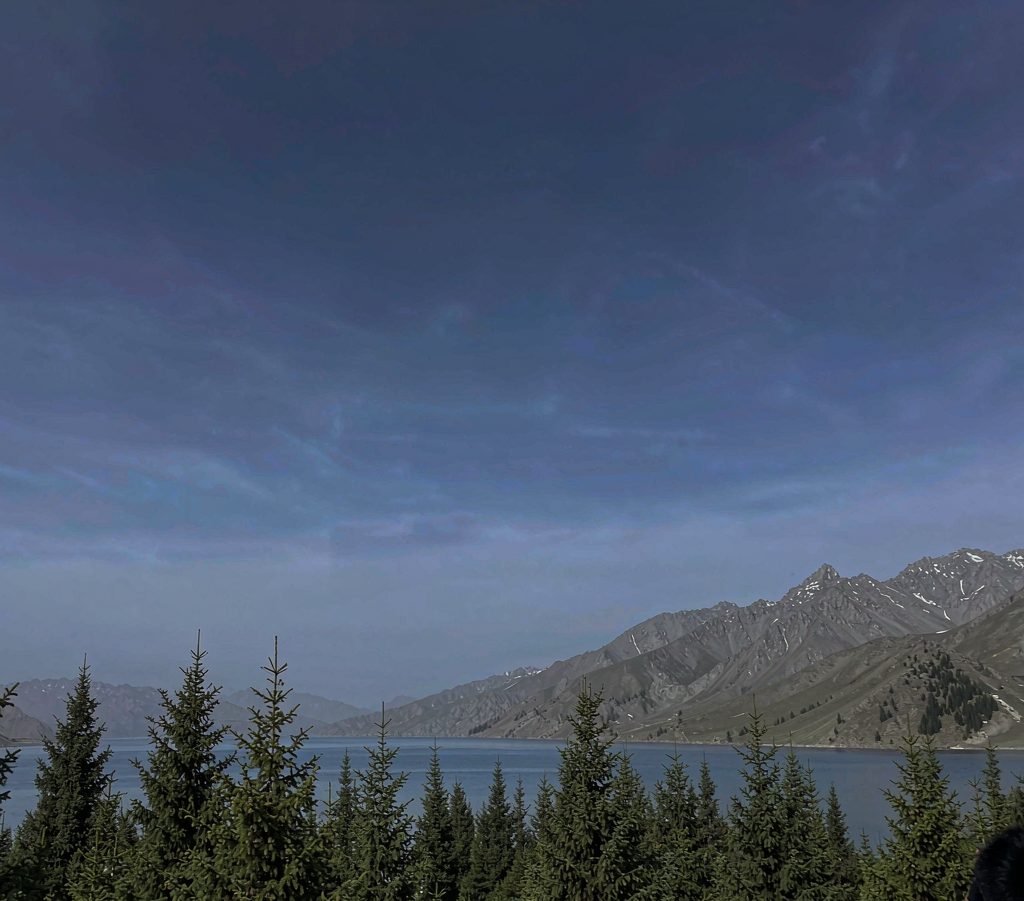
- Heavenly Lake beneath the snow-covered Bogda Peak
- Turpan's karez underground canal system, the Jiaohe and Gaochang ruins
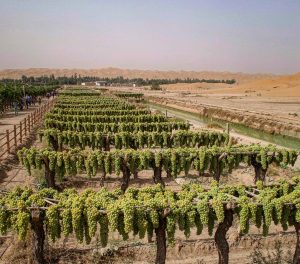
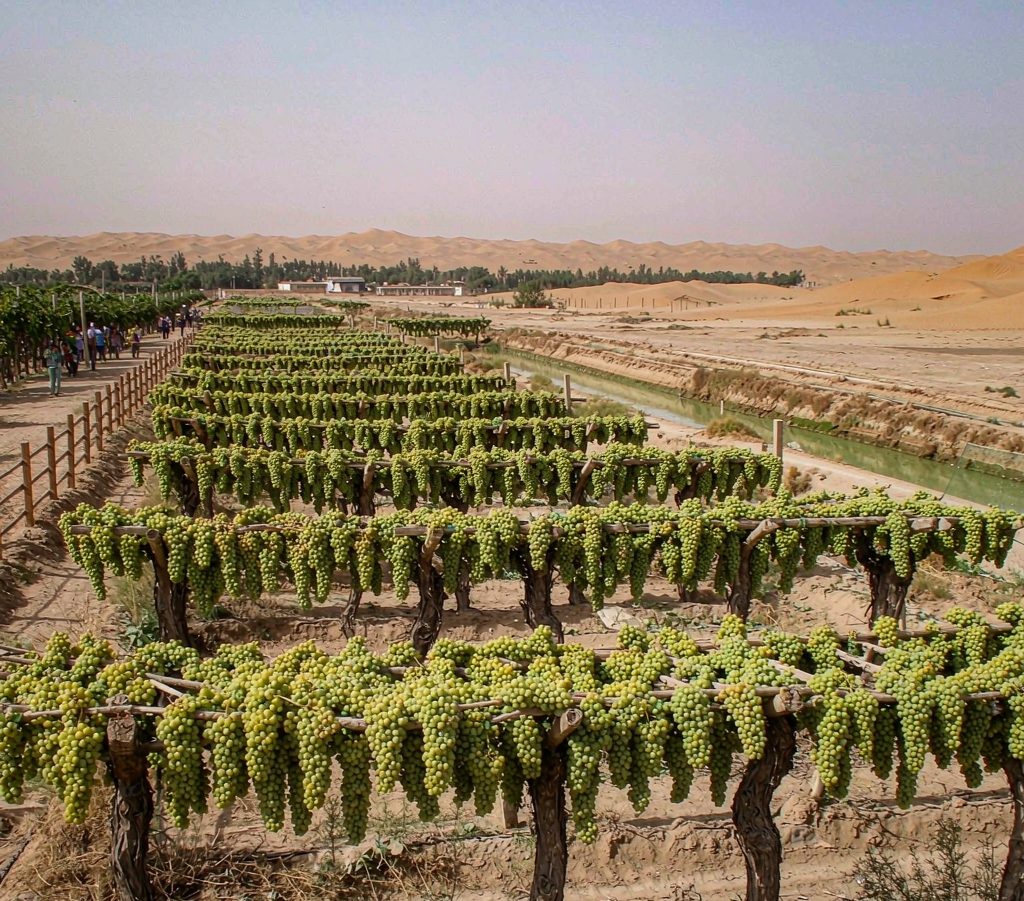
- Flaming Mountains and the Grape Valley oasis
- Kuqa Grand Canyon and the Kizil Thousand Buddha Caves
- Karakul Lake and the Pamir plateau on the Karakoram Highway
Itinerary
-
1 Arrival in Urumqi
Dinner Urumqi, 4-star hotelAfternoon: Meet your guide at Urumqi Diwopu airport and transfer to the hotel. Urumqi is the most remote large city on earth — further from any ocean than anywhere else — and it is the hub for everything in Xinjiang.
Evening: Welcome dinner at a Uyghur restaurant. Start as you mean to go on: lamb skewers with cumin and chilli, laghman hand-pulled noodles, polo (the Uyghur pilaf with carrot and raisins), and naan from a tandoor. The tea is brick tea with milk and salt, and it is an acquired taste.
Practical note: Xinjiang observes its own time zone, two hours behind Beijing time, and most local businesses run on Xinjiang time. Your guide will always specify which clock is meant.
-
2 Heavenly Lake & the Bogda Peak
Breakfast, Lunch Urumqi, 4-star hotel08:00 - Departure: A two-hour drive east toward the Bogda Shan range.
10:00 - Heavenly Lake: Tianchi, an alpine lake at 1,980 metres in a glacial valley directly beneath Bogda Peak, which rises to 5,445 metres and stays snow-covered all year. The water is a deep green-blue and the surrounding slopes carry Tianshan spruce. We walk the shoreline path and take the cable car to a viewpoint above the eastern end, from where the peak fills the head of the valley.
12:30 - Lunch: Kazakh cooking at a yurt camp near the lake — hand-pulled noodles with horse-meat sausage, or a simple lamb stew.
15:00 - Return toward Urumqi, stopping at the Xinjiang Regional Museum if time permits (closed Mondays). Its Tarim Basin mummies — naturally preserved bodies up to 4,000 years old, with European features and woven wool clothing — are the single most disorienting exhibit in Chinese archaeology and they fundamentally change how you think about this region's history.
Evening: Free. The Erdaoqiao bazaar in Urumqi is worth an evening on your own.
-
3 Turpan: Karez Canals, Jiaohe & the Flaming Mountains
Breakfast, Lunch Turpan, 4-star hotel08:00 - Departure: A three-hour drive southeast, dropping from the mountains into the Turpan depression.
11:00 - Karez system: Turpan sits at 154 metres below sea level, the lowest point in China, in a basin where summer temperatures reach 47°C and annual rainfall is under 20 mm. It survives on the karez — a network of underground channels, some more than 5,000 kilometres in total, that carry meltwater from the mountains by gravity without losing it to evaporation. We visit a working section and the museum that explains the construction: vertical shafts dug every 20 to 30 metres, connected by a gently sloping tunnel.
12:30 - Lunch: In Turpan, in the shade of a grape trellis. The grapes here are the sweetest in China — the seedless varieties are dried into the raisins that supply most of the country.
14:30 - Jiaohe ruins: A city carved rather than built, on a loess plateau between two river gorges, inhabited from around 100 BC until it was abandoned in the 14th century. Because it was cut down into the earth rather than built up, and because the climate is so dry, the walls, streets and Buddhist stupas survive in remarkable condition. Walking it in the late afternoon heat is punishing; walking it as the light lengthens is extraordinary.
17:00 - Flaming Mountains: A range of red sandstone hills on the northern edge of the basin that glow at sunset and gave the region its name — and its most famous fictional visitor, since this is the mountain range of Journey to the West.
-
4 Gaochang, Astana Tombs & the Drive to Kuqa
Breakfast, Lunch Kuqa, 4-star hotel08:30 - Gaochang: The larger and older of Turpan's two ruined cities, a walled garrison town of the Gaochang kingdom that flourished from the 1st century BC until it burned in the 14th. The walls are still substantial, and the Buddhist monastery complex in the north of the city is legible on the ground.
10:30 - Astana tombs: The cemetery of Gaochang's inhabitants, where the arid conditions preserved not just bodies but documents, silk, bread, dumplings and painted scrolls from the Tang period. A small number of tombs are open, with murals and grave goods in place.
12:30 - Lunch in Turpan.
14:00 - Drive to Kuqa: Around six hours south and west along the northern edge of the Taklamakan, following the old Silk Road's northern branch. The landscape is gravel desert and salt flats, with the Tian Shan always to the north.
20:00 - Kuqa: Arrival. Kuqa was the largest of the oasis kingdoms on the northern route and the birthplace of the Kuchean school of Buddhist music and painting that influenced China for centuries.
-
5 Kizil Caves & Kuqa Grand Canyon, then Fly to Kashgar
Breakfast, Lunch Kashgar, 4-star hotel08:00 - Kizil Thousand Buddha Caves: Seventy kilometres west of Kuqa, cut into a cliff above the Muzat River, these are the oldest major Buddhist cave complex in China — work began around the 3rd century AD, two centuries before Dunhuang. The surviving murals show the distinctly Central Asian style of the Kuchean school: strong outlines, warm earth pigments, and figure types that look westward rather than east. Many of the finest panels were removed by German and Japanese expeditions in the early 20th century and are now in Berlin and Tokyo; your guide will explain what was taken and what remains.
12:00 - Lunch near the caves.
13:30 - Kuqa Grand Canyon: A narrow red sandstone gorge cut by a seasonal river, with walls up to 200 metres and a walk along the gravel bed between them. The colours and the scale are the point; it takes around an hour and a half.
16:30 - Return to Kuqa and transfer to the airport.
19:00 - Flight to Kashgar: Around one hour southwest to Kashgar, the westernmost city in China and the place where the northern and southern Silk Road routes met before crossing the Pamirs.
21:00 - Kashgar: Transfer to the hotel. If it is a Saturday, tomorrow is the bazaar.
-
6 Kashgar Sunday Bazaar, Id Kah & the Old Town
Breakfast, Lunch Kashgar, 4-star hotel09:00 - Sunday bazaar: The largest livestock market in Central Asia, held on the edge of the city and running from early morning to mid-afternoon. Traders bring sheep, goats, cattle, camels and horses from across the region, and the dealing is done with handshakes under the coat. Around it, the general market sells everything else: knives, carpets, copper, saddles, dried fruit, spices and mountains of naan. It is loud, dusty, chaotic and completely unselfconscious — the best single experience in Xinjiang.
13:00 - Lunch: At the bazaar — skewers, polo, and the fresh naan pulled from the tandoor while you wait.
15:00 - Id Kah Mosque: The largest mosque in China, founded in 1442, with a courtyard that holds tens of thousands for Friday prayers. The turquoise-tiled portal and the yellow-brick minaret are the architectural signature of the city. Non-Muslim visitors are welcome outside prayer times, and the calm inside the courtyard after the bazaar is a deliberate contrast.
17:00 - Old town: The mud-brick lanes behind the mosque, where workshops turn out copper vessels, wood carvings, leather boots, knives and musical instruments. Much of the old town was demolished and rebuilt in the 2010s, but the working streets on the northern edges remain, and the craftsmen are real.
Evening: Dinner on the night market street in front of the mosque — the whole lamb roasting on spits is the landmark.
-
7 Karakul Lake & the Pamir Plateau
Breakfast, Lunch Kashgar, 4-star hotel07:30 - Departure: South on the Karakoram Highway, the road that runs 1,300 kilometres from Kashgar to Islamabad across the Khunjerab Pass. We go as far as Karakul, around 200 kilometres and four hours.
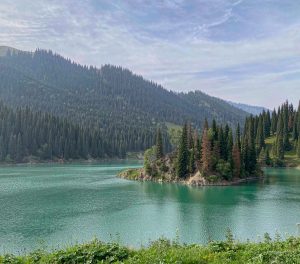
11:30 - Karakul Lake: A lake at 3,600 metres on the Pamir plateau, ringed by the Muztagh Ata (7,546 m), Kongur Tagh (7,649 m) and Kongur Tiube peaks. The water changes colour through the day from grey to a deep blue-green, and Kyrgyz herders camp on the shore with their yurts and Bactrian camels. On a still morning the reflection of Muztagh Ata in the lake is one of the great images of the Silk Road.
13:00 - Lunch: With a Kyrgyz family in a yurt or a small settlement — tea, bread, yoghurt and mutton.
15:00 - Return: The drive back to Kashgar, with the light changing on the Pamir peaks the whole way. If anyone in the group has a border permit we can continue to Tashkurgan; otherwise this is the turnaround point.
19:00 - Kashgar: Final evening. The Abakh Khoja Mausoleum, the tiled tomb of the 17th-century ruler and his family and the most beautiful building in the region, can be visited this afternoon if the schedule allows.
-
8 Departure from Kashgar
Breakfast Not includedMorning: Depending on your flight, a last visit to the Abakh Khoja Mausoleum — built in 1640 and still the finest example of Uyghur funerary architecture, with its green-tiled dome and the tomb chamber holding the coffins of five generations of the Khoja family — or a final pass through the old town workshops.
Late morning: Transfer to Kashgar airport for your onward flight, usually via Urumqi to Beijing, Shanghai or Chengdu.
Practical note: If you want to continue overland into Pakistan via the Khunjerab Pass, or into Kyrgyzstan via the Irkeshtam or Torugart passes, these require separate border permits and independent arrangements arranged well in advance. We can advise but not include them in this itinerary.
Gallery
What's included
- 7 nights at 4-star hotels (Urumqi x2, Turpan x1, Kuqa x1, Kashgar x3)
- Daily breakfast plus 6 lunches and 3 dinners
- English-speaking guide throughout, travelling with you on trains and flights
- Domestic flight Urumqi-Kashgar (economy) and all rail tickets where used
- Private 4WD or coach with driver for all overland legs
- All entrance fees listed (Heavenly Lake, karez, Jiaohe, Gaochang, Id Kah, Abakh Khoja, Karakul)
- Uyghur home visit and a Kashgar old-town workshop tour
- All road tolls, parking and border-permit assistance
- Airport and station transfers
Not included
- International and domestic flights to and from Urumqi
- Most dinners
- Travel insurance and visa fees
- Tips for guide and driver
- Personal expenses and hotel incidentals
- Optional Tashkurgan border-permit extension