Overview
The Sichuan-Tibet Highway is one of the great road journeys on earth. Its southern line runs 2,100 kilometres from Chengdu to Lhasa, crossing the Hengduan range — a series of parallel north-south mountain chains that forced the road to climb and descend repeatedly — and passing through some of the most varied landscape in Asia.
You begin on the Sichuan plain and climb through the panda reserves of Wolong, cross the 4,480-metre Balang pass beneath the Siguniang massif, and drop to the Tibetan valleys of Danba. From there the route runs west across the high grassland of Litang to Yading and its three sacred peaks, then follows the upper Yangtze gorges into Tibet proper. The last days cross the 5,000-metre passes of the eastern plateau, drop through the glacier-fed lakes and rhododendron forest around Ranwu, and descend the Nyang valley to Lhasa.
It is a demanding trip — ten days of driving, much of it above 4,000 metres, with genuine altitude and long days. It is done in comfort: 4WD vehicles, the best available hotels at each stop, and a guide who has driven the road for years. And it delivers, day after day, scenery that nowhere else in China can match.
- The full southern Sichuan-Tibet Highway from Chengdu to Lhasa
- Balang Mountain pass at 4,480 m beneath the Siguniang massif
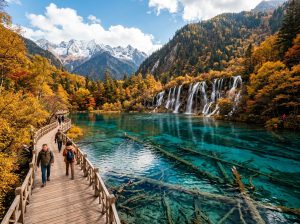
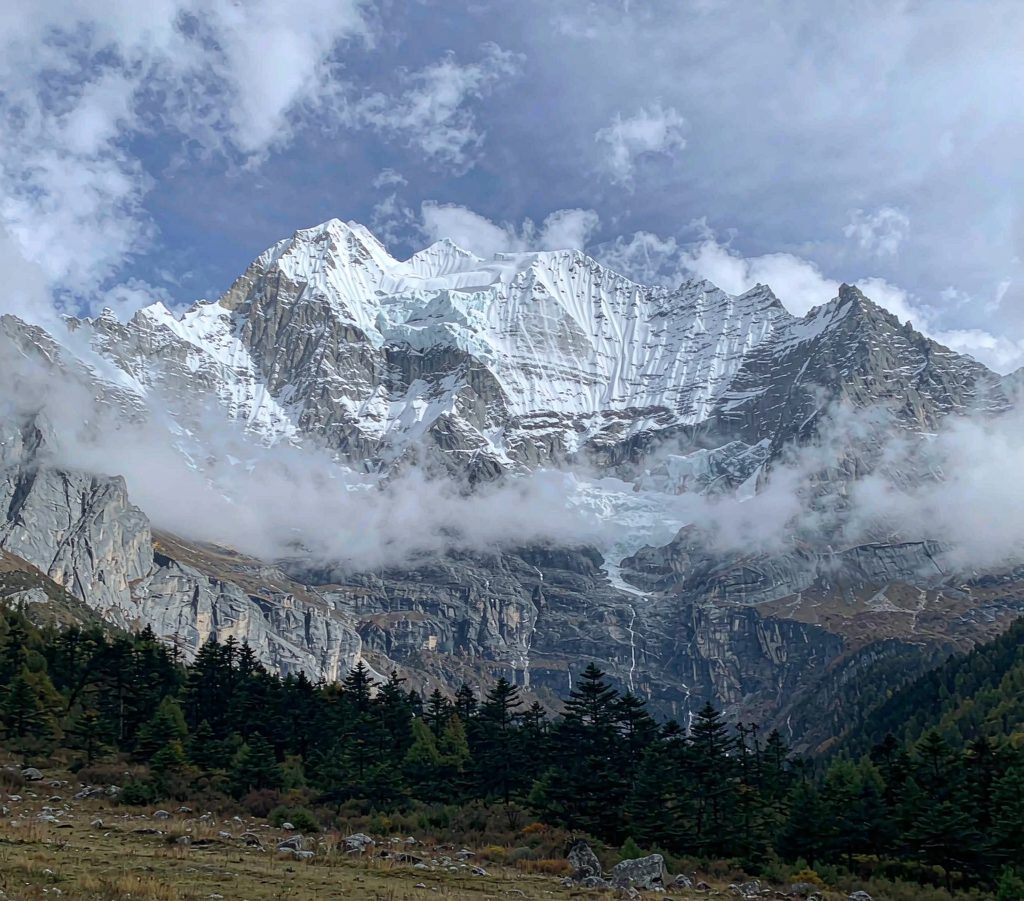
- Yading's three sacred peaks and the Five-Colour Lake at 4,700 m
- The Litang grassland, the highest town in Sichuan at 4,014 m
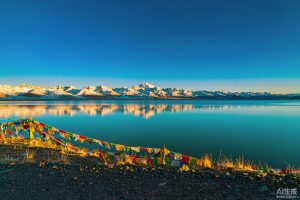
- Ranwu Lake and the glaciers of the eastern Nyainqentanglha
- The Nyang valley and the forested gorges of eastern Tibet
- Arrival in Lhasa with the Potala Palace
Itinerary
-
1 Arrival in Chengdu
Dinner Chengdu, 5-star hotelAfternoon: Your guide meets you at Tianfu (TFU) or Shuangliu (CTU) airport and transfers you to the hotel.
Late afternoon: Free to settle in. If you have the energy, the People's Park teahouse is the right introduction to the city and is a five-minute walk from much of the centre.
Evening: Welcome dinner and a full briefing on the eleven days ahead — the route, the altitude profile, what to pack and how the days are structured. This is a serious journey and it is worth understanding the shape of it before you start: you will cross twelve passes above 4,000 metres and sleep above 3,500 on five nights.
Important: Do your packing tonight. Everything you need for the next ten days travels in the vehicle with you, and you will not see a shop with much in it after day three.
-
2 Chengdu to Siguniang via the Balang Pass
Breakfast, Lunch, Dinner Rilong, best available hotel (3,160 m)07:30 - Departure: West out of Chengdu, climbing out of the basin and into the Wolong National Nature Reserve — the largest of the giant panda reserves, and the forest the animals actually live in.
11:00 - Balang Mountain pass: At 4,480 metres. The road climbs through forest, then rhododendron scrub, then bare scree to the pass, and on a clear day the view back takes in the cloud filling the Sichuan basin and, west, the snow peaks of the Minya Konka range.
12:30 - Lunch: On the descent toward Rilong.
14:30 - Rilong: Arrival at 3,160 metres, the Tibetan town beneath Mount Siguniang — the Four Sisters, whose highest peak Yaomei Feng reaches 6,250 metres.
16:00 - Acclimatisation walk: A gentle hour on the hillside for the first view of the massif, then rest.
Evening: Dinner of yak hotpot. Sleep early; you have gained 2,500 metres since breakfast.
Important: Headache on the first night at this altitude is normal. Drink water continuously and tell your guide if symptoms persist.
-
3 Siguniang to Danba, the Tibetan Valleys
Breakfast, Lunch, Dinner Danba, best available hotel (1,860 m)08:00 - Shuangqiao Valley: A morning in the glacial valley beneath the Four Sisters massif — hanging glaciers, the Potala Peak formation, and the alpine pasture at 3,800 metres with the north face of Yaomei Feng directly ahead. The park shuttle takes you up the valley so the walking is in sections.
12:30 - Lunch near the valley entrance.
14:00 - Drive to Danba: Around three hours, dropping sharply into the Dadu River valley — a descent of more than 1,300 metres, which everyone's body appreciates.
17:00 - Danba: A county of Tibetan villages in a deep valley, famous for its stone watchtowers — some 30 metres tall and several hundred years old, built by the Jiarong Tibetans as both dwellings and fortifications, and for the whitewashed houses with their carved wooden window frames.
Evening: A walk through the village and dinner with a local family if arrangements allow.
-
4 Danba to Yajiang across the High Grassland
Breakfast, Lunch, Dinner Yajiang, best available hotel (2,640 m)08:00 - Departure: West out of Danba, climbing back up out of the valley.
10:30 - Tagong grassland: A wide high pasture at 3,700 metres with the Yala Snow Mountain rising behind it, dotted with yak herds and nomad camps. The Tagong monastery here is one of the most important in the Kham region, and the grassland around it is grazed every summer by families who come up from the valleys.
12:30 - Lunch in Tagong.
14:00 - The road west: A long, spectacular afternoon crossing high grassland, passing through Xinduqiao, where the poplar-lined valley and the log houses give the area its reputation as the photographers' corridor.
17:30 - Yajiang: Arrival at 2,640 metres in the Yalong River valley — a low, sheltered night after several days of height.
Evening: Dinner and rest.
-
5 Over the High Passes to Litang
Breakfast, Lunch, Dinner Litang, best available hotel (4,014 m)08:00 - Departure: The road climbs through a series of passes above 4,400 metres — the Jianziwan and Kazila — across open high plateau where the only traffic is army convoys and the occasional pilgrim.
11:00 - The plateau: Above 4,500 metres the land is treeless grassland with snow peaks on every horizon and, in June and July, wildflowers across it. Yaks and Tibetan foxes are common, and the sky is a blue you only get at this altitude.
12:30 - Lunch: In a roadside Tibetan tent restaurant on the plateau — usually yak, potatoes and butter tea, and usually very welcome.
15:00 - Litang: Arrival at 4,014 metres, one of the highest towns in the world and the birthplace of the Seventh Dalai Lama. The Litang monastery on the hill above the town is home to several hundred monks and has the best view over the surrounding grassland.
17:00 - Monastery visit: If the group has the energy, an hour at the monastery as the monks gather for the evening prayers.
Important: Litang at 4,014 metres is the highest sleeping point on the trip apart from Yading. Take the afternoon and evening slowly.
-
6 Litang to Daocheng Yading
Breakfast, Lunch, Dinner Riwa or Yading village, guesthouse (3,800 m)08:00 - Departure: A three-hour drive south across the Haizi Mountain plateau — a bizarre and beautiful landscape of granite boulders and hundreds of small glacial lakes left by the ice sheet that covered this area.
11:00 - Daocheng: Arrival in the county town at 3,750 metres, in a broad valley farmed by Tibetans for more than a thousand years.
12:30 - Lunch in Daocheng.
14:00 - On to Riwa: A further two hours south to the settlement at the entrance to the Yading nature reserve, at around 2,900 metres.
16:00 - Check in and rest.
Evening: Dinner and a briefing on tomorrow. Yading is the high point of the trip in both senses — the walking on day seven reaches 4,700 metres — and your guide will explain the route options and the turnaround points honestly.
-
7 Yading: The Three Sacred Peaks
Breakfast, Lunch, Dinner Riwa or Yading village, guesthouse (3,800 m)07:00 - Into the reserve: The park shuttle takes you up the valley to Longlongba, then a short walk or battery cart to Chonggu Monastery at 3,880 metres.
08:00 - The three peaks: Chenresig at 6,032 metres, Jambeyang at 5,958 and Chanadorje at 5,958 — the three bodhisattvas of compassion, wisdom and power — stand around the head of the valley, and the whole area is a pilgrimage circuit for Tibetan Buddhists.
09:00 - The climb: From Chonggu the path climbs 700 metres in about five kilometres, through rhododendron scrub and then open scree, to the Milk Lake at 4,600 metres — an opaque turquoise glacial tarn ringed by white marble scree. A further 30 to 40 minutes brings you to the Five-Colour Lake at 4,700, whose mineral bed shifts between blue, green and ochre as the light changes.
13:00 - Descent: Back down the same path, around three hours.
17:00 - Return to the guesthouse.
Important: This is the hardest walking day of the trip. Anyone who wants to turn back at the Milk Lake can, and that is a perfectly good day. Horses are available for the lower half. Your guide stays with the slowest walker and carries oxygen.
-
8 Yading to Batang, into the Yangtze Gorges
Breakfast, Lunch, Dinner Batang, best available hotel (2,580 m)07:30 - Departure: A long day retracing the road north to Litang and then turning west, around 350 kilometres in total.
12:00 - Lunch on the road.
15:00 - The descent to the Yangtze: The road drops off the plateau into the gorge of the Jinsha — the upper Yangtze — and the change is abrupt: bare grassland gives way to scrub, then to dry valleys and a wide, ochre river running far below.
18:00 - Batang: Arrival at 2,580 metres, the last town in Sichuan. The air is noticeably warmer and heavier, and the valley vegetation has turned nearly subtropical.
Evening: Dinner and rest. Tomorrow you cross into the Tibet Autonomous Region.
-
9 Batang to Zuogong, Crossing into Tibet
Breakfast, Lunch, Dinner Zuogong, best available hotel (3,780 m)08:00 - The Jinsha bridge: The border between Sichuan and the Tibet Autonomous Region is the middle of a bridge over the Jinsha River. Passports and permits are checked at the checkpoint on the far side, which takes an hour or so.
10:30 - Mangkang: The first town in Tibet, at 3,875 metres, on the old caravan route between Yunnan and Lhasa. Salt was carried along this road for centuries from the wells at Yanjing, and the terraced evaporation pans are still visible below the town.
12:30 - Lunch in Mangkang.
14:00 - The climb: The road switchbacks up onto the plateau again, crossing the 4,338-metre Jueba Mountain, where the switchbacks are so tightly stacked that you can see a dozen tiers of road below you at once.
17:30 - Zuogong: Arrival at 3,780 metres.
Evening: Dinner. The food from here on is Tibetan across the board — tsampa, yak, butter tea.
-
10 Zuogong to Ranwu, the Glacier Lakes
Breakfast, Lunch, Dinner Ranwu, best available hotel (3,900 m)08:00 - Departure: West across the plateau, climbing to the 4,658-metre Yela pass with its long lines of prayer flags.
11:00 - Bangda: A wide, high grassland at 4,120 metres and the site of one of the highest civilian airports in the world. The runway is over five kilometres long, and the air is so thin that aircraft need all of it.
12:30 - Lunch in Bangda.
14:00 - The Nujiang gorge: The road descends into the gorge of the Nujiang — the upper Salween — on one of the most dramatic stretches of the whole journey, with the river a white thread far below and the road cut into a wall of rock.
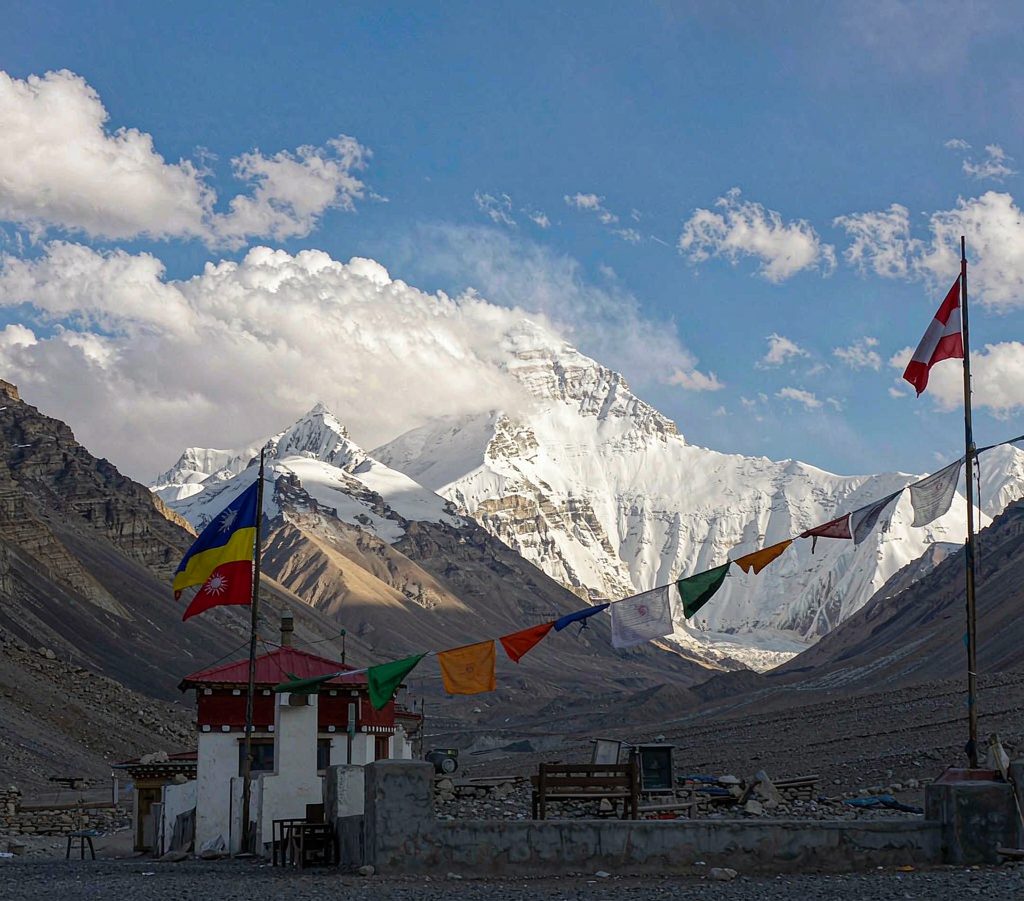
16:00 - Ranwu Lake: Arrival at 3,900 metres. The lake sits in a glacial trough with the snow peaks of the eastern Nyainqentanglha range reflected in it, and the forest around it is the first real woodland you have seen since Danba. On a still evening the reflection is perfect.
19:00 - Dinner and the best night's sleep of the week.
-
11 Ranwu to Lhasa & Departure
Breakfast Not included07:30 - Departure: The last long drive — around 400 kilometres, and one of the best days of the trip.
09:30 - The Nyang valley: The road follows the Parlung Tsangpo down through rhododendron and then conifer forest, with the river running beside it and waterfalls coming off the cliffs on every side. In May the rhododendron is in flower across the whole valley.
12:00 - Lunch: In Bomi or along the valley.
14:00 - The Lulang forest: A final stretch of dense, moss-hung forest, and then the climb to the 4,720-metre Sela pass, from which the road drops into the Lhasa valley with the first view of the Yarlung Tsangpo.
18:00 - Lhasa: Arrival at 3,650 metres, after 2,100 kilometres and ten days on the road.
Evening: Drop-off at your hotel, Gonggar airport, or Lhasa railway station.
Practical note: If you can spare two more days, the Potala Palace, the Jokhang Temple and the Barkhor circuit are right there, and after ten days of road it is worth seeing the destination properly. We can arrange the extension and the onward rail journey to Xining.
Gallery
What's included
- 10 nights at the best available hotels and guesthouses along the route
- Daily breakfast plus 9 lunches and 6 dinners
- English-speaking guide throughout the entire overland route
- Private 4WD vehicle with experienced plateau driver
- Tibet Travel Permit, Alien Travel Permit and all regional permits
- All entrance fees listed (Wolong, Siguniang, Yading, Ranwu, Potala, Jokhang)
- Yading park shuttles and battery cart
- Oxygen canisters, pulse oximeter and altitude medication throughout
- All road tolls, parking and fuel
- Airport and station transfers in Chengdu and Lhasa
Not included
- Flights and trains to Chengdu and from Lhasa
- Most dinners in the larger towns
- Travel insurance — must cover altitude evacuation above 4,500 m
- Tips for guide and driver
- Personal expenses and hotel incidentals
- Single-room supplement