Overview
The Friendship Highway was built in the 1960s to connect Lhasa with Kathmandu, and it remains one of the great road journeys in the world — 800 kilometres from the Tibetan plateau down through the Himalaya into Nepal.
This seven-day version is the short form. It covers Lhasa's essential sites, then follows the southern route through Yamdrok Lake, Gyantse and Shigatse to Everest Base Camp at 5,200 metres. From there the road drops to the border at Gyirong or Zhangmu, where you cross into Nepal with a descent of more than 3,700 vertical metres in under 200 kilometres.
The final day is the one people remember. You leave the cold dry plateau in the morning, pass through subtropical forest and waterfalls by early afternoon, and arrive in Nepal's humid lowland air having crossed one of the sharpest environmental transitions on earth. It is the only scheduled trip we run that ends in a different country from the one it started in.
- The full Friendship Highway from Lhasa to the Nepal border
- Everest Base Camp at 5,200 m and sunrise on the north face
- Descent of over 3,700 m from the plateau to the Nepali lowlands in one day
- Potala Palace, Jokhang Temple and the Barkhor circuit
- Yamdrok Lake, Gyantse Kumbum and Tashilhunpo Monastery
- The Gawu La pass with five 8,000 m peaks in one view
Itinerary
-
1 Arrival in Lhasa
No meals Lhasa, 4-star hotelAfternoon: Your guide meets you at Gonggar airport or Lhasa railway station and transfers you to the hotel at 3,650 metres.
Late afternoon: Rest. Nothing else is scheduled, and nothing else should be. The single most common mistake visitors make in Tibet is doing too much on the first day.
Evening: A light dinner and an early night. Your guide will visit to check on you, brief you on the week, and confirm that your permits are in order.
Important: You will need a valid Chinese visa (or the Tibet entry arrangement made through us) and a passport valid for at least six months. Nepal issues a visa on arrival at the border for most nationalities, but bring two passport photographs and USD cash for the fee.
-
2 Lhasa: Potala, Jokhang & Norbulingka
Breakfast Lhasa, 4-star hotel09:00 - Potala Palace: The winter palace of the Dalai Lamas, built from 1645 on the site of a 7th-century fortress, rising 117 metres over the city. The White Palace held the government and the living quarters; the Red Palace is the funerary and religious half, holding the gilded stupas of eight Dalai Lamas. Entry is by timed ticket and the route through it is one-way, so we take it slowly.
13:00 - Lunch.
14:30 - Jokhang and the Barkhor: The holiest temple in Tibet, founded in the 7th century around the Jowo statue brought by Princess Wencheng, and the circuit around it that pilgrims walk clockwise all day. The best hour is late afternoon, when the light is low and the crowds of prostrating pilgrims are at their thickest.
17:00 - Norbulingka: The summer palace of the Dalai Lamas, a walled park on the western edge of the city with pavilions, gardens and the New Palace built in the 1950s. It is a quieter, greener contrast to the day's first two stops.
-
3 Yamdrok Lake & Gyantse to Shigatse
Breakfast, Lunch Shigatse, 4-star hotel08:00 - Departure: South from Lhasa, climbing to the Kamba La pass at 4,794 metres.
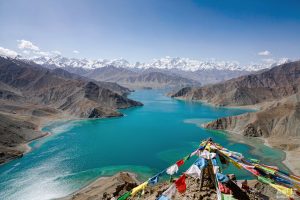
09:30 - Yamdrok Lake: One of Tibet's four holy lakes, its turquoise water twisting 70 kilometres between bare mountains. We stop at the pass for the overview, then descend to the shore to walk along it. In Tibetan belief the lake is the transformed body of a goddess, and its colour is said to tell the fortune of the coming year.
12:00 - Lunch in Nangartse.
14:00 - Karo La glacier: An ice wall at 5,045 metres coming down toward the roadside, hung with prayer flags.
15:30 - Gyantse Kumbum: The largest stupa in Tibet, built in 1427, with 77 chapels and around 100,000 painted images of Buddhist deities across its nine tiers. The murals are among the finest surviving examples of Tibetan painting, showing a strong Newari influence from the Nepali artisans who worked on it.
17:30 - Shigatse: Arrival, with Tashilhunpo Monastery visited the following morning if you arrive late.
-
4 Tashilhunpo & the Road to Everest
Breakfast, Lunch Rongbuk guesthouse or EBC tent camp08:00 - Tashilhunpo Monastery: The seat of the Panchen Lamas, founded in 1447 and the largest functioning monastery in Tibet with around 800 monks. The Assembly Hall, the Tomb of the Tenth Panchen Lama, and above all the 26-metre gilt-bronze Maitreya in its own chapel — the largest seated Buddha image in the world — make it the equal of anything in Lhasa.
10:00 - Departure: Southwest toward Tingri and Everest.
13:00 - Lunch near Lhatse.
15:00 - Tingri checkpoint: Permits and passports are checked here.
16:30 - Gawu La pass: At 5,219 metres, the panorama over five of the world's fourteen 8,000-metre peaks — Everest, Lhotse, Makalu, Cho Oyu and Shishapangma — laid out along the horizon.
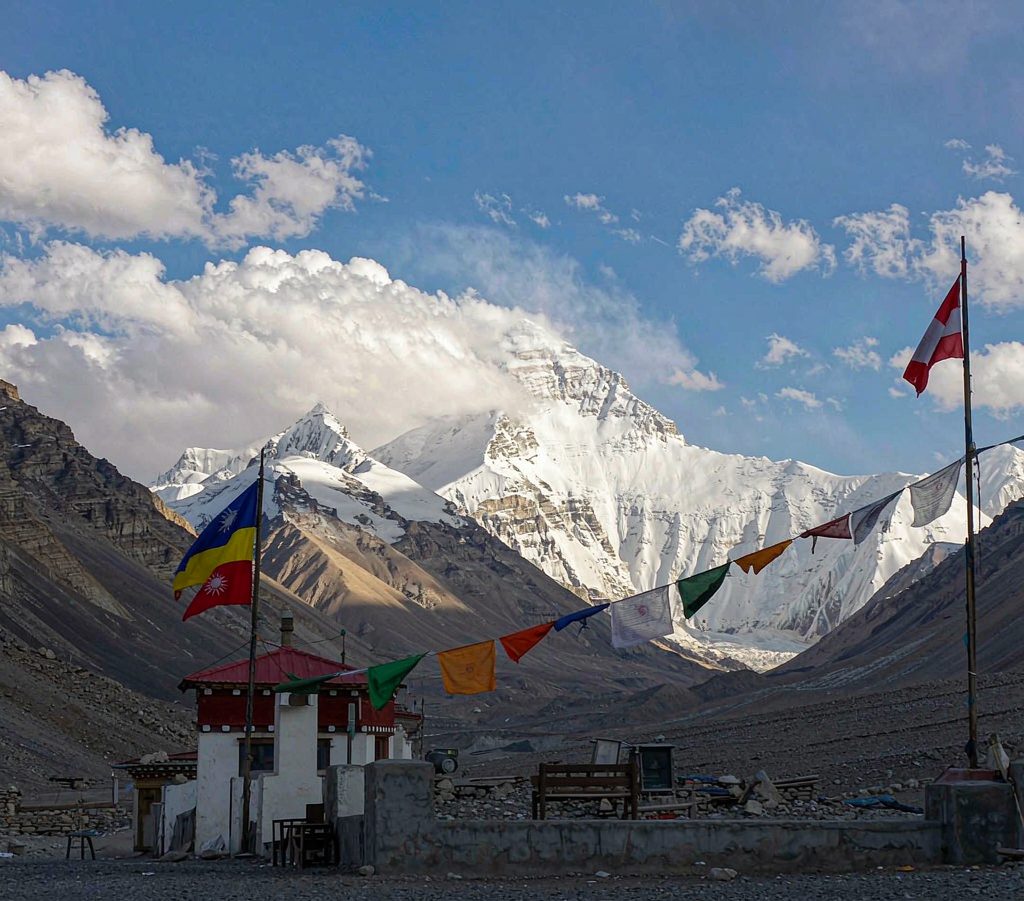
18:00 - Rongbuk and Everest Base Camp: Descend to the monastery at 4,980 metres and continue to the tourist base camp at 5,200. The north face of Everest rises more than 3,500 metres directly above you.
19:30 - Sunset on the summit if the weather allows, then dinner and the coldest night of the trip.
Important: Accommodation here is dormitory rooms or tents with shared facilities, no heating and no running water. It is genuinely cold. This is unavoidable if you want sunrise on the mountain and almost everyone agrees it is worth it.
-
5 Everest Sunrise & Descent to the Border
Breakfast, Lunch Gyirong or Zhangmu, 3-star hotel06:00 - Sunrise: From the base camp or the monastery terrace, weather permitting. The summit pyramid catches the first light and holds it for about five minutes while everything below is still in shadow. Cloud is common; if it is over, it is over.
07:30 - Breakfast.
08:30 - Departure: Back over the Gawu La pass, then southwest toward the border.
12:00 - Lunch en route.
15:00 - The descent begins: This is the day that changes everything. The road leaves the plateau behind and starts to drop through the Himalayan front ranges, and the vegetation changes as you lose height — bare scree to alpine scrub, then conifer forest, then rhododendron, then bamboo and tree ferns. Waterfalls appear on every cliff face and the air gets warmer and wetter by the kilometre.
17:30 - Gyirong or Zhangmu: Arrival at the border town. Gyirong, at 2,700 metres, is the crossing that has replaced Zhangmu for most traffic since the 2015 earthquake, and it sits in a deep forested gorge with snow peaks above. Zhangmu is lower and wetter still.
Evening: Rest, and prepare your passport for tomorrow's crossing.
-
6 Border Crossing & Drive to Kathmandu
Breakfast, Lunch Kathmandu, 4-star hotel08:00 - Formalities: Exit stamps on the Chinese side, a short walk or drive across the Rasuwa or Zhangmu bridge, and entry formalities on the Nepali side. Nepal issues a visa on arrival for most nationalities — USD 30 for 15 days, USD 50 for 30 — payable in cash, and you need two passport photographs. Your Tibetan guide accompanies you to the line and a Nepali guide and driver meet you on the other side.
10:00 - Into Nepal: The road continues down through terraced hillsides, subtropical forest and river gorges, with the contrast to the last five days as complete as it is immediate. You have dropped more than 3,500 metres since yesterday morning.
13:00 - Lunch: Nepali dal bhat — lentil soup, rice and vegetable curry, and the first meal in a week that does not revolve around tsampa and yak.
16:00 - Kathmandu: Arrival, around 120 kilometres and four to five hours from the border. Transfer to your hotel in Thamel or the city centre.
Evening: Free. After a week on the plateau, Kathmandu's noise, colour and density are a shock in the best way.
-
7 Kathmandu & Departure
Breakfast Not included09:00 - Kathmandu: A morning in the valley. Depending on your flight, we visit Swayambhunath — the Monkey Temple on its hill with the painted eyes of the Buddha looking out over the city — or Boudhanath, one of the largest stupas in the world and the centre of Tibetan Buddhism in exile, where the circumstances that brought you here take on a different weight.
12:00 - Lunch in Thamel.
14:00 - Departure: Transfer to Tribhuvan International Airport for your onward flight.
Practical note: If you have more time, the Kathmandu valley deserves three days on its own — Bhaktapur, Patan Durbar Square and the mountain flight along the Himalaya are all worth adding. We can arrange an extension, or a onward trip to Pokhara or Chitwan. Tell us at booking.
Gallery
What's included
- 6 nights at hotels and guesthouses (Lhasa x2, Shigatse x1, EBC x1, Gyirong or Zhangmu x1, Kathmandu x1)
- Daily breakfast plus 5 lunches
- English-speaking Tibetan guide, and a Nepali guide from the border
- Private 4WD vehicle on the Tibetan side, transfer vehicle on the Nepali side
- Tibet Travel Permit, Alien Travel Permit and border permits
- All entrance fees listed (Potala, Jokhang, Kumbum, Tashilhunpo, Rongbuk, EBC)
- Oxygen canisters and altitude monitoring
- Border-crossing assistance on both sides
- Airport transfers in Lhasa and Kathmandu
Not included
- International flights to Lhasa and from Kathmandu
- Nepal visa on arrival (USD 30-50 depending on duration, payable at the border)
- Most dinners
- Travel insurance — must cover altitude evacuation and cross-border medical transfer
- Tips for guides and drivers on both sides
- Personal expenses and hotel incidentals