Overview
Chongqing food is Sichuan cooking turned up — more chilli, more numbing pepper, more oil, and a confidence that comes from cooking for people who work hard in a climate that tries to drown them.
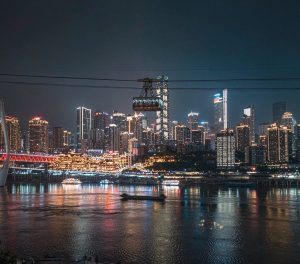
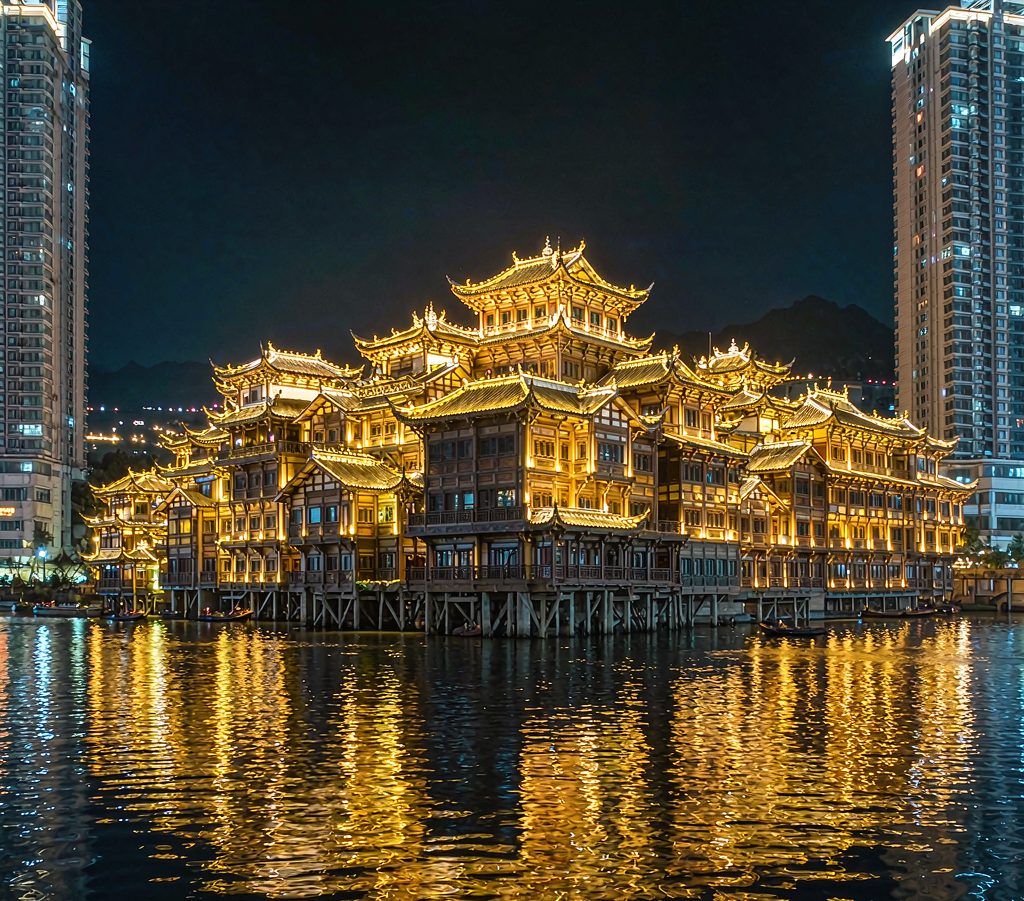
This two-day tour treats the city as one long meal. You eat hotpot in a converted air-raid shelter from the wartime bombing, breakfast on xiaomian noodles at a stall halfway up a public stairway, and work through the street-food lanes of Ciqikou and the old dockside. In between there is the city itself — the monorail through a residential building, the stilt houses of Hongyadong, the cableway across the Yangtze, and the night view from Nanshan where the whole peninsula is lit up on both rivers.
It is not a diet trip. It is the best two days you will spend in this city.
- Chongqing hotpot in a converted wartime air-raid shelter
- Xiaomian breakfast noodles at a hillside stall the city swears by
- Hongyadong stilt-house complex at night, and the Yangtze cableway
- Ciqikou ancient town's street-food lanes
- Nanshan viewpoint for the whole peninsula lit up between two rivers
- Monorail ride through a residential building at Liziba
Itinerary
-
1 Old Town, Monorail & Air-Raid-Shelter Hotpot
Dinner (hotpot) Chongqing, 4-star hotel10:00 - Pick-up: Your guide meets you at the hotel and we start on the hills. Chongqing is built on rock above two rivers, and the easiest way to understand it is to walk the stairways — the city has more public steps than anywhere else in China, and whole neighbourhoods are connected by them rather than by road.
10:30 - Liziba monorail: We ride Line 2 and stand on the platform where the train passes directly through the sixth to eighth floors of a nineteen-storey residential block. It looks like an accident of planning; it was designed that way, with the building and the track built together, and rubber-tyred trains and vibration dampers keeping the noise below 60 decibels inside.
12:00 - Xiaomian breakfast: Served all morning rather than only at breakfast — wheat noodles in a bowl dressed with chilli oil, Sichuan pepper, preserved mustard greens, garlic water and peanut, assembled in under a minute and eaten standing up. Your guide orders by the liang, and warns you about the youhaiwei, the sesame-paste version, if that suits you better. The two-liang bowl is the standard order.
14:00 - Ciqikou ancient town: A thousand-year-old porcelain-port town on the Jialing River, now partly rebuilt and largely given over to food. We work the lanes: mahua twist pastries, youcha savoury grain tea, sweet potato noodles, and the famous Chongqing chicken with dried chilli buried in a mountain of peppers you push aside to find it.
17:00 - Check-in and rest: An hour to recover before dinner.
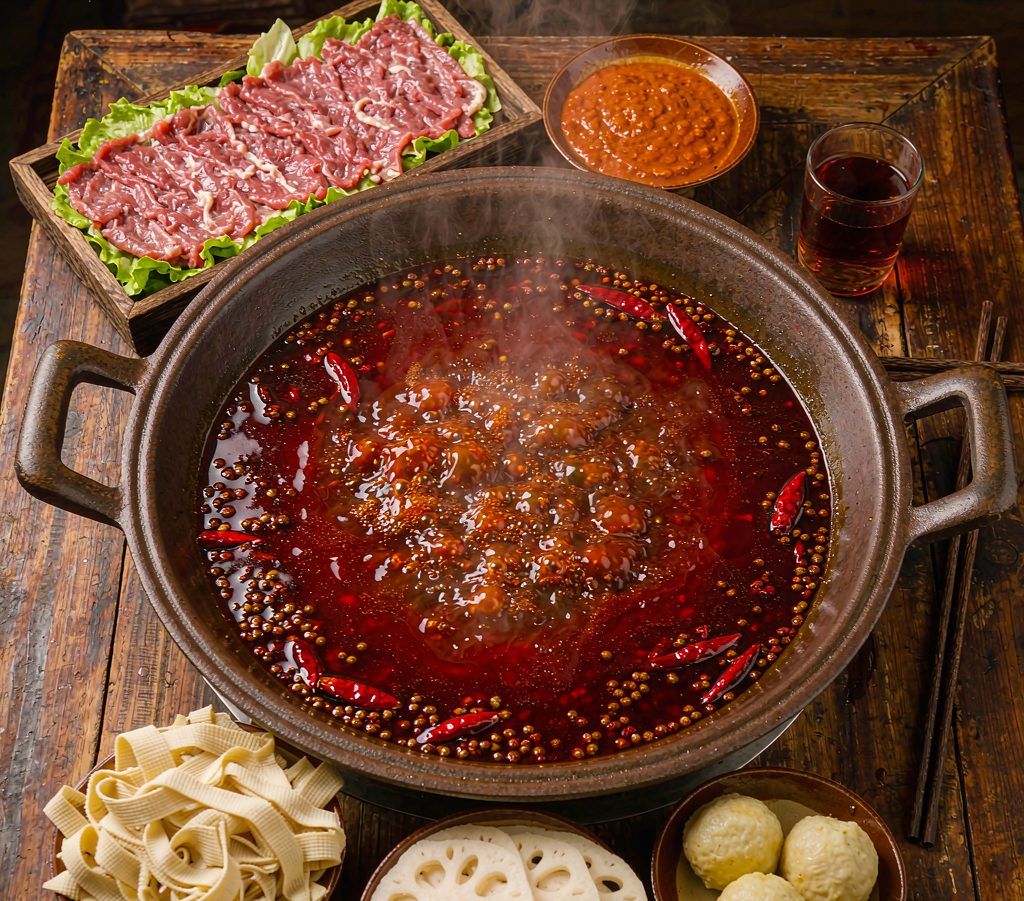
19:00 - Hotpot: In a former air-raid shelter dug into the hillside during the Japanese bombing of the 1940s, now a restaurant where the stone walls stay cool even with a hundred pots boiling. Chongqing hotpot differs from Chengdu's: more tallow, more chilli, less sesame, and the broth is not for drinking. Your guide explains the dipping order, the timing for each ingredient, and why the oil bowl is non-negotiable for locals.
-
2 Hongyadong, Cableway & the Nanshan Night View
Breakfast, Lunch Not included09:00 - Hongyadong: An eleven-storey stilt-house complex built into the cliff above the Jialing River, recreating the diaojiaolou architecture that gave this dockside its character. Inside it is a vertical maze of food halls, craft shops and teahouses; outside, it is the building everyone photographs. We go in the morning while it is manageable.
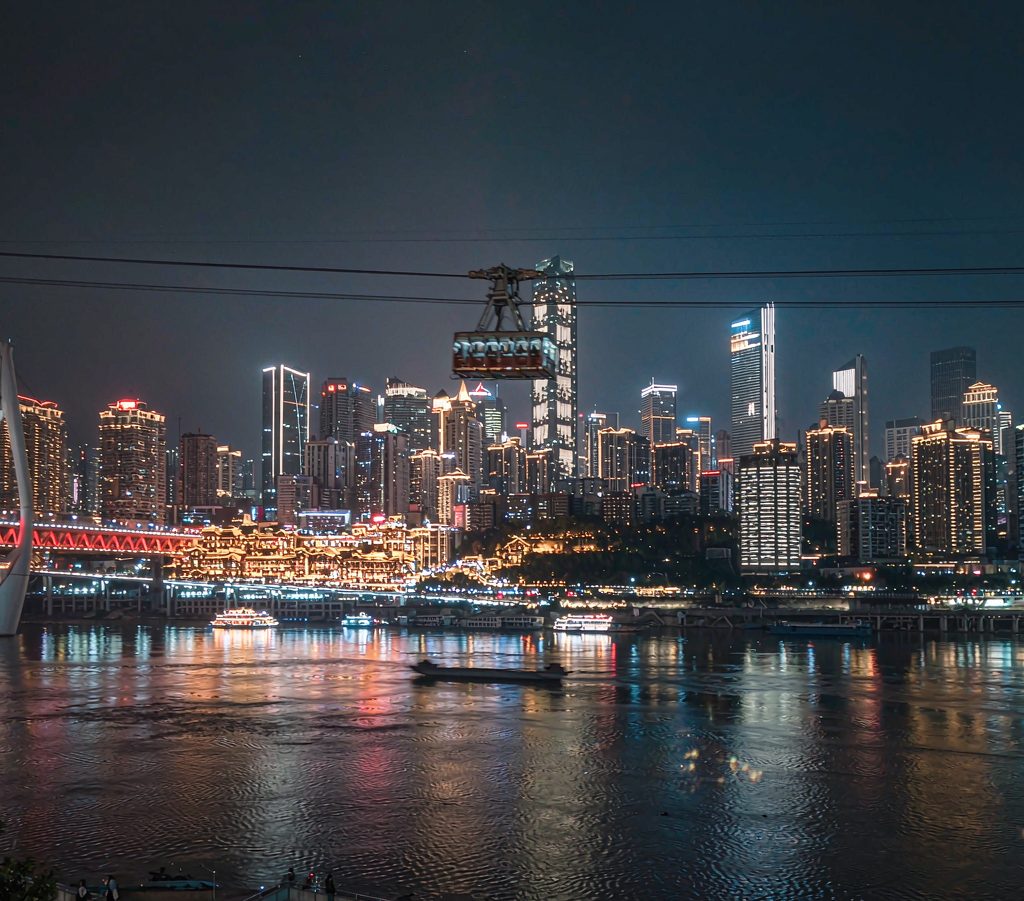
11:00 - Yangtze River cableway: A 1,166-metre cable car that has crossed the river since 1987, carrying commuters long before it carried tourists. The four-minute crossing gives you the width of the Yangtze and the scale of the city on both banks.
12:30 - Lunch: Jianghu cuisine — the rough, bold cooking of the river ports, named after the world of itinerant boatmen and labourers. The signature is laizi ji, chicken buried in chilli, and sour-and-hot fish in a broth you drink from a bowl.
15:00 - Free time: A teahouse in the old town, or the Three Gorges Museum if you want the history of the reservoir and the 1.2 million people it displaced. Your guide recommends based on your onward schedule.
18:30 - Nanshan viewpoint: We drive up the mountain south of the river for the view that defines Chongqing — the entire peninsula lit up between the Yangtze and Jialing, with the towers stacked up the slope and the river traffic moving through it. Dinner can be arranged up here, or you return to the city to eat.
20:30 - Departure: Transfer to your hotel, Chongqing North railway station, or Jiangbei airport.
Gallery
What's included
- 1 night at a 4-star hotel in central Chongqing
- Daily breakfast plus 1 hotpot dinner and 4 street-food tastings
- English-speaking local guide with serious food knowledge
- Private vehicle and driver, plus metro and monorail fares
- All entrance fees listed (Hongyadong, Yangtze cableway, Nanshan)
- Ciqikou guided food walk
- Hotel pick-up and drop-off
- Unlimited bottled water — you will need it
Not included
- Flights and trains to and from Chongqing
- Most meals beyond those listed (street food is cheap and everywhere)
- Alcoholic drinks
- Travel insurance and visa fees
- Tips for guide and driver
- Personal expenses